The Tuesday White Shirt: Five Checks Before You Spend a Penny
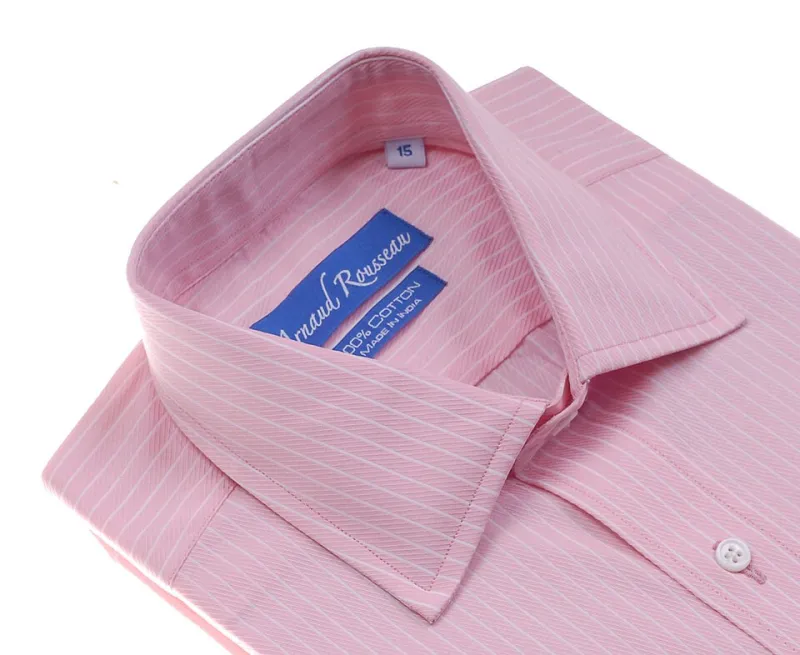
Photo: Ashjini, CC BY-SA 3.0, via Wikimedia Commons
A white shirt is the most optimistic thing you can buy. It promises clean lines, good mornings, and a personality that has its act together. Then Tuesday arrives: the collar wilts, the buttons gape, the cuffs sit somewhere between your wrist and your elbow, and you spend the day adjusting. Most white shirts fail not because they are badly made, but because they were bought without a test. In 2026, I am buying fewer and checking harder.
Why white shirts fail by Tuesday
A white shirt has to survive a real day: a commute, a heated office, a lunch that involves a table, a meeting where you raise your arms, and a bus home in the dark. The failures are predictable. The collar rolls outward instead of sitting flat. The fabric is opaque in the shop but transparent under office lighting. The cuff is too short to show under a knit, or too long to stay put. The armhole is tight enough to pull across the chest. The hem is too short to tuck or too long to leave out. None of these show up in a mirror for thirty seconds. All of them show up by Tuesday.
Check one: the collar roll
The collar is the first thing people see and the first thing to fail. A good collar should stand up on its own, with a gentle roll rather than a sharp crease. If the collar flops forward when you try it on, it will flop by lunchtime. Check the interlining: it should feel firm but not stiff. A collar that is too soft looks limp; one that is too stiff looks like a uniform. If you wear knitwear over your shirt, a slightly smaller collar works better — it peeks out without fighting the neckline. If you wear a blazer, a collar with a little height balances the lapel.
Check two: opacity in daylight
White is not one colour. A shirt can be bright white, cream, or a soft ivory, and the opacity changes with the light. Take the shirt to a window. Hold it up. If you can see your hand clearly through the fabric, it will be a problem under office lighting. Look at the yoke and the sleeve; those are the places where thin fabric shows first. A slightly heavier cotton poplin is safer than a very fine voile if you want to wear it alone. If you want a shirt for layering under knits, a lighter weight is fine — just make sure it does not show through the knit.
Check three: cuff length
The cuff should sit at the wrist bone when your arms are down, and it should show about a centimetre below a knit sleeve or a blazer sleeve. If the cuff is too short, it disappears and the shirt looks mean. If it is too long, it bunches and looks sloppy. Check the cuff fastening: a single button is easiest; a double cuff is smarter but needs cufflinks. For 2026 layering, I look for a cuff that is slightly narrower so it does not bulge under a close-fitting knit.
Check four: armhole and shoulder
Raise your arms in the fitting room. If the shirt pulls across the chest or the back, size up or try a different cut. The shoulder seam should sit at the edge of your shoulder, not halfway down your arm. A dropped shoulder can look relaxed, but it can also make a shirt feel like a nightdress. Check the armhole: a high, tight armhole will restrict movement; a low armhole will create bulk under a blazer. A good shirt lets you reach for a train strap without exposing your midriff.
Check five: the hem and the tuck
The hem decides how you wear it. A shirt that is too short will not stay tucked; one that is too long will bunch. A curved hem is easier to leave out; a straight hem is better for tucking. If you want to wear it half-tucked, check that the front is long enough to stay in place when you sit. If you want to wear it under a knit, a shorter hem is fine because nobody sees it. But if you want it to do both, choose a mid-length hem with a slight curve.
The Tuesday test
Before you buy, do a five-minute Tuesday test. Put the shirt on with the trousers or skirt you plan to wear. Sit down. Cross your arms. Reach above your head. Check the buttons: do they gape? Check the collar: does it sit flat? Check the cuffs: do they stay at your wrist? If you can, walk around the shop for two minutes. A shirt that feels good for thirty seconds can still be wrong for a Tuesday.
Styling notes for 2026 layering
Under a crew-neck knit, let the collar peek out and push the cuffs up so they show. Under a V-neck, a white shirt adds a clean line; keep the collar soft so it does not fight the knit. Under a blazer, choose a shirt with a slightly firmer collar and a cuff that shows. With a slip dress, a white shirt underneath is still a good trick — just make sure the shirt is thin enough not to add bulk. And if you find one that passes all five checks, buy it in white and consider a second in cream.
The goal is not a drawer full of white shirts. It is one that makes you feel sorted on a Tuesday, and another that does the same on a Thursday. Fewer, better, tested.