The One-Photo Rule: What the Changing-Room Camera Catches That the Mirror Misses
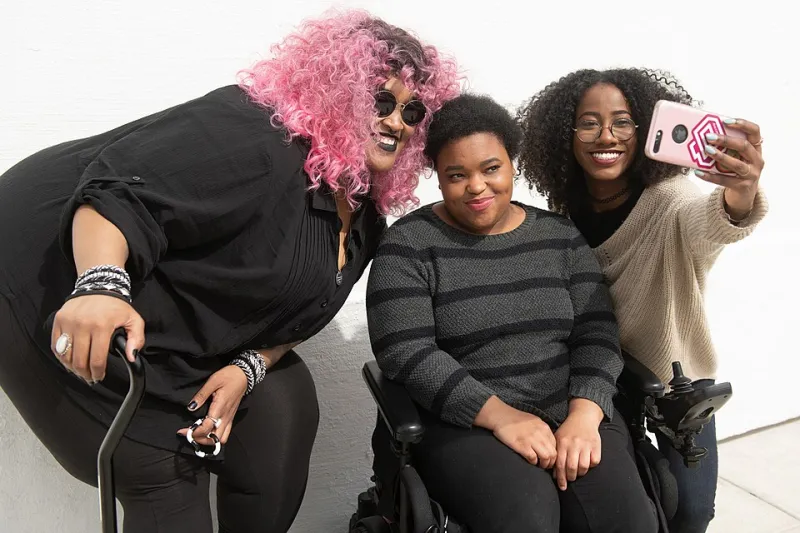
Photo: Disabledandhere, CC BY 4.0, via Wikimedia Commons
Last week, in the changing room of a high-street shop that shall remain nameless but was definitely playing music slightly too loud, I nearly bought a caramel knit. Three mirrors, warm lighting, a flattering angle: I looked like the sort of woman who has her life together and owns a label maker. Then I took one photo. In the photo, the shoulder seam was doing a small but unmistakable shrug, the hem was sitting at the least useful part of my hip, and the colour made my face look like I had slept in a train station. I put it back. The mirror had been selling me a mood; the camera was showing me the clothes.
That is the whole idea behind what I now call the one-photo rule. It is not about becoming your own critic, and it is certainly not about posting anything. It is a practical buying test for ordinary high-street shopping, especially when the lighting is designed to make everything look better than it will on a wet Tuesday in your kitchen.
Why one photo beats three mirrors
Changing rooms are clever little theatres. You get multiple angles, dramatic lighting and a mirror positioned to make you stand differently. You twist, you turn, you suck in, you let out. Three mirrors give you three versions of the same moment, and none of them quite show you what you will see at home.
A single photo freezes the whole silhouette. It shows the garment as a shape rather than a feeling. It also gives you something mirrors cannot: a little distance. You can look at the photo and ask, quite neutrally, does this fit? Does it sit where I want it to sit? Does it work with the trousers I actually own? That is a very different question from do I look good in this mirror right now, under this light, while holding my stomach in.
One photo is enough. Not twelve. Not a full editorial shoot between the curtain and the till. One clear, full-length photo, taken at chest height, standing normally, with the phone held steady. If you want a second shot from the side, fine, but keep the purpose the same: information, not inspection.
The difference between a fit check and a body check
This is the important bit. A fit check looks at the clothes. A body check looks at you and finds fault. They can feel similar in the moment, especially if you have spent years shopping with a running commentary in your head.
So give yourself a rule. In the photo, look at the garment first. Shoulder seam, button stance, hem, fabric, colour. If you notice yourself zooming in on your thighs, your stomach, your arms, put the phone down. That is not the test. The test is whether the thing you are about to spend money on behaves properly on a real body in a real room.
If a photo is going to make you feel scrutinised rather than informed, skip it. The aim is confidence, not a courtroom. The one-photo rule is there to help you buy better, not to give you another reason to be unkind to yourself.
What I look for in the frame
This is my very unglamorous checklist. It takes about thirty seconds and saves a fortune.
- Shoulder seam: It should sit near the edge of your shoulder. If it lifts when you move your arms forward, the top is too small. If it droops halfway down your arm, it is too big or badly cut.
- Pulling and gaping: Look at the buttons and the zip. Is there a little X-shaped pull across the chest or hip? Is the placket lying flat? A gaping shirt is not a personality trait.
- Hemline: Where does it end? With the trousers or skirt you would actually wear? A jacket that stops at the widest part of your hip is doing you no favours unless you have planned for it.
- Colour near your face: In the photo, look at your neck and jaw next to the fabric. Does the colour make your skin look clear and awake, or grey and tired? Shop lighting can lie, but a truly wrong colour usually manages to look wrong even in a phone snap.
- Fabric behaviour: Are there already creases where you do not want them? Is it shining? Is it sagging? Will it survive a commute and a desk chair?
- The ordinary-life test: Can you picture wearing it to the supermarket, the office, the school gate, the pub? If it only works in a changing room, it is not a buy. It is a costume.
Recreating the test at home
If you want to try this with something you already own, or with an online order you are deciding whether to keep, do it in ordinary light. Stand near a window in the morning, not under a ring light and not in a dramatically lit hallway. Wear the trousers or shoes you would actually pair with it. Prop your phone on a shelf or a stack of books, set the timer, and stand as you normally would. No posing, no twisting, no holding your breath.
The photo should look slightly boring. That is the point. Boring is honest. If the outfit works in a boring photo in your own bedroom, it will work in real life. If it only works when you arrange yourself like a mannequin, you have your answer.
A note on sizes and second opinions
High-street sizing is a lottery. I have been a different size in three shops on the same afternoon, and none of it was a moral failing. The photo helps you ignore the label and look at the fit. If you are between sizes, take both into the changing room and photograph each one. Then compare. It is much easier to see which one sits properly when the images are side by side.
And if you are still thinking about it twenty-four hours later, that is useful information too. Keep the receipt, leave the tags on, and try it again at home in your own light. The one-photo rule is not about talking yourself out of everything. It is about giving yourself a clearer view before you commit.
The camera is not a verdict on you. It is a second opinion on the clothes. And sometimes, quite wonderfully, that second opinion says yes.